
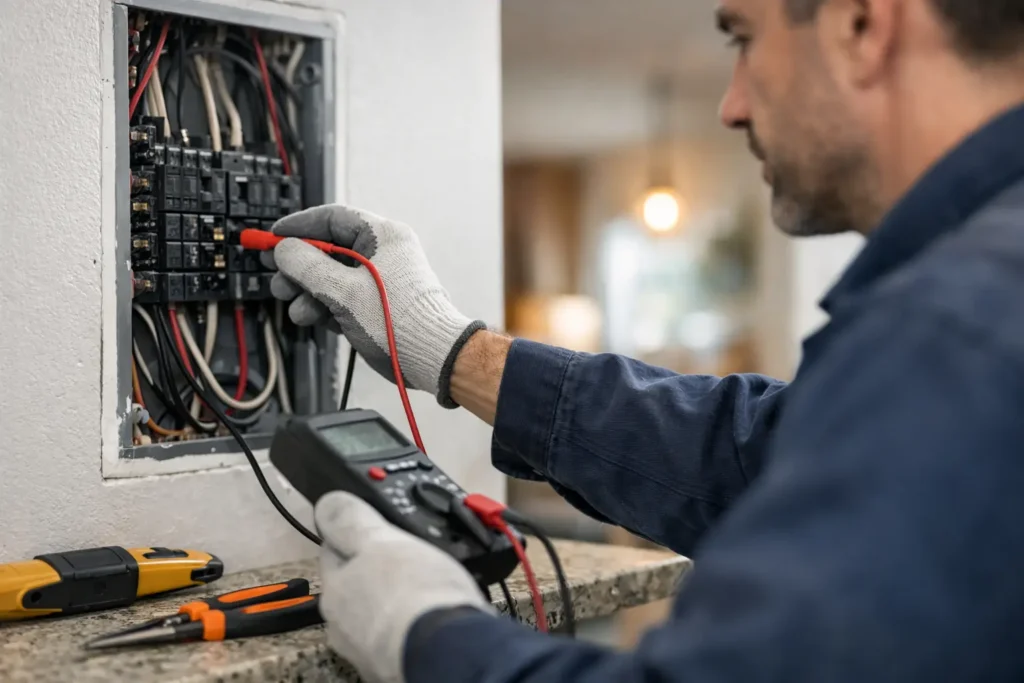
A tripped breaker at opening time, a burning smell near a panel, or lights that dim when equipment starts are not minor inconveniences. They can interrupt operations, damage equipment, and create a serious safety risk. Effective electrical fault troubleshooting helps property owners and facility teams separate a simple reset issue from a problem that requires immediate professional attention.
For homes, offices, retail spaces, and industrial facilities, the goal is not to keep resetting breakers until power returns. The goal is to identify the source, make the area safe, and correct the fault before it causes downtime, equipment failure, or fire damage.
Start With Safety and the Scope of the Problem
Before investigating any electrical issue, consider whether there are signs of immediate danger. Smoke, sparking, a hot electrical panel, melted outlet covers, buzzing sounds, repeated breaker trips, or the smell of burning insulation require prompt action. Keep people away from the affected area, switch off power only if it is safe to do so, and contact a qualified electrical professional.
Do not touch exposed wiring, wet electrical equipment, or a panel that appears damaged. Water and electricity are a particularly dangerous combination, especially after a plumbing leak, flooding, roof damage, or cleaning incident. In a commercial facility, isolate the area and inform the relevant operations or safety contact before work continues nearby.
The next step is defining the scope. Is one outlet affected, one room, one circuit, or the entire property? This simple distinction helps narrow the likely cause. A single dead outlet may point to a tripped GFCI outlet, loose connection, or failed receptacle. A whole section without power may indicate a circuit breaker issue, overloaded circuit, or panel fault. A building-wide outage can involve the main service, utility supply, or a major distribution problem.
Electrical Fault Troubleshooting: Common Warning Signs
Electrical faults do not always cause a complete outage. Many develop gradually through heat, loose connections, aging components, damaged cables, or circuits that are carrying more load than they were designed to handle. Facility teams should treat recurring symptoms as maintenance issues, not temporary annoyances.
Breakers That Keep Tripping
A circuit breaker trips to stop current flow when it detects an unsafe condition. The most common causes are an overload, a short circuit, or a ground fault. An overload happens when too many appliances or devices run on the same circuit. This is common in older properties, temporary work areas, kitchens, server rooms, and offices where additional equipment has been added over time.
A short circuit occurs when live and neutral conductors make unintended contact. A ground fault occurs when electricity takes an unintended path to ground, often through damaged insulation, moisture, or faulty equipment. Both can be hazardous and need proper diagnosis.
A breaker that trips once after a known overload may reset normally after the load is reduced. A breaker that trips repeatedly should not be forced back on. Disconnect portable equipment on that circuit, note what was operating at the time, and arrange inspection. Repeated resets can allow an underlying fault to worsen.
Flickering, Dimming, or Unstable Lighting
Flickering lights can be caused by a loose bulb or a failing fixture, but widespread flickering deserves more attention. If several lights dim when an air conditioner, elevator, pump, refrigerator, or other large load starts, the property may have a load balance, connection, voltage, or capacity issue.
In commercial spaces, unstable lighting can also affect emergency lighting, security systems, displays, and employee productivity. Record when the issue occurs and which equipment is running. That information gives the electrical technician a faster starting point and helps avoid unnecessary disruption during inspection.
Hot Outlets, Discoloration, and Burning Odors
An outlet or switch should not feel hot during normal use. Heat, discoloration, crackling, scorch marks, or a burning odor can indicate a loose terminal, overloaded receptacle, damaged wiring, or defective device. Stop using the outlet immediately and do not cover the issue with a faceplate replacement or extension cord.
The same rule applies to electrical panels. A panel that feels warm, produces a smell, makes unusual noise, or shows signs of corrosion should be inspected promptly. Electrical panels manage the property’s distribution system. Small defects inside the enclosure can create major operational risks if left untreated.
A Practical Process for Property Teams
Good troubleshooting begins with accurate observations, not assumptions. A facility manager does not need to dismantle a panel to provide useful information. The most valuable details are often the simplest: when the issue began, what changed recently, what equipment was in use, and whether the fault is constant or intermittent.
First, check whether there has been a recent change in occupancy, equipment, layout, fit-out work, cleaning activity, water leakage, or utility interruption. A new coffee machine in a break room, added workstations, portable heaters, or upgraded HVAC equipment can push an existing circuit beyond its safe operating limit. In industrial settings, motor startup loads and new machinery may have a similar effect.
Next, inspect only what can be safely observed from the outside. Look for unplugged equipment, damaged power cords, overloaded extension leads, wet areas, loose outlet covers, and visible damage to fixtures. For a tripped circuit, unplug nonessential devices before attempting one reset. If the breaker holds, reconnect items one at a time to identify whether a particular device is causing the trip. If it trips again with everything disconnected, stop there and call an electrician.
Finally, document the event. Include the circuit or area affected, time of occurrence, equipment connected, visible symptoms, actions taken, and whether the fault returned. This creates a useful maintenance record, particularly for annual maintenance contracts where recurring issues may point to a larger upgrade need rather than a one-time repair.
When a Reset Is Not a Repair
Resetting a breaker has a place, but it is not a repair method. It only restores power after the protective device has responded to a problem. If the cause remains, the circuit will likely trip again.
This matters most in properties with aging infrastructure or changing operational demands. A circuit that was adequate for basic lighting may not safely support computers, printers, charging stations, kitchen appliances, and supplemental cooling equipment. The correct solution may involve redistributing loads, replacing damaged components, adding dedicated circuits, upgrading the panel, or revising the electrical layout during a fit-out.
There is a trade-off between a quick temporary fix and a proper corrective action. Replacing a failed outlet may resolve a localized issue. However, if that outlet failed because of loose wiring, moisture intrusion, or a heavily loaded circuit, the surrounding circuit should also be assessed. A qualified technician can test connections, insulation condition, grounding, voltage performance, and load demand before recommending the most practical repair.
Preventing Repeat Electrical Problems
Preventive maintenance is usually less disruptive and less expensive than emergency repairs. It also gives property teams the opportunity to plan work around business hours, tenant schedules, and critical operations rather than responding under pressure.
A practical electrical maintenance plan should include periodic panel inspections, tightening and testing by qualified personnel, checks for overheating and corrosion, verification of protective devices, outlet and switch inspections, and review of circuit loads as the property changes. GFCI protection should be tested in applicable areas, especially kitchens, bathrooms, exterior locations, maintenance rooms, and other spaces where moisture is present.
For commercial and industrial facilities, preventive work should also account for critical equipment. HVAC systems, pumps, refrigeration, IT equipment, access control, fire-related systems, and production equipment may need dedicated attention because an electrical interruption can have consequences beyond a dark room. Planned inspections help identify weak points before they affect occupants, inventory, security, or revenue.
Avoid treating extension cords and power strips as permanent infrastructure. They are useful for temporary, low-demand needs when used correctly, but they do not replace properly designed outlets and circuits. Daisy-chained power strips, damaged cords, and overloaded adapters are common sources of preventable faults.
Choose a Response Partner That Sees the Whole Property
Electrical issues often overlap with other building conditions. Water leaks can affect wiring. HVAC faults can overload circuits. Fit-out changes can alter electrical demand. Civil work can damage buried cables, while cleaning activities can expose poorly protected outlets in wet areas. Managing each symptom through separate contractors can slow down diagnosis and create gaps in responsibility.
A coordinated facilities provider can assess the electrical fault in the context of the property, then involve plumbing, HVAC, civil, cleaning, or fit-out support if the cause extends beyond the electrical system. Maxa Technical Services LLC provides integrated property support with 24/7 service availability, helping clients reduce coordination time while keeping maintenance work organized through one point of contact.
When an electrical issue appears, act early, keep the area safe, and document what you see. A prompt professional inspection can turn an uncertain fault into a clear repair plan and help keep your property operating without avoidable interruptions.