
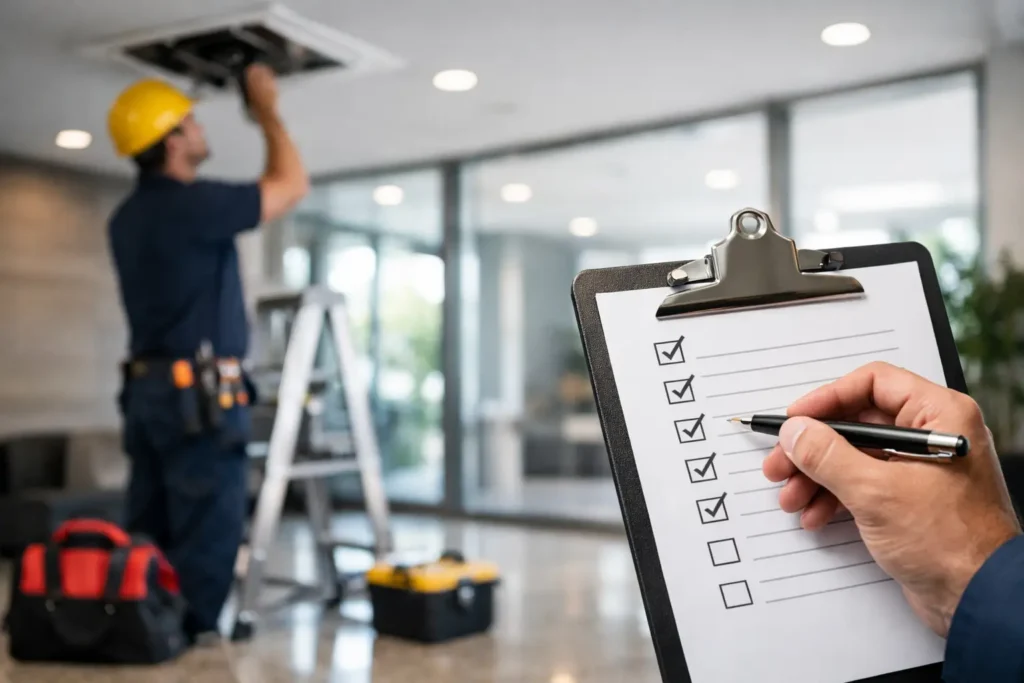
A failed air conditioner during a tenant move-in, a leaking pipe above a finished office, or a tripped electrical panel during business hours can quickly become expensive. The best preventive maintenance checklist helps property teams identify small issues before they interrupt operations, damage assets, or create safety concerns.
For property owners and facility managers, preventive maintenance is not simply a list of routine tasks. It is a planned system for protecting building equipment, extending asset life, controlling repair costs, and giving occupants a more reliable environment. The right checklist should be practical enough for daily use and detailed enough to support informed maintenance decisions.
What Makes a Preventive Maintenance Checklist Effective?
A useful checklist is based on the building’s actual equipment, usage levels, occupancy pattern, and known problem areas. A residential tower, retail unit, office, warehouse, and industrial facility may all need HVAC, plumbing, electrical, cleaning, and civil maintenance, but the inspection frequency and risk level will differ.
The strongest plans also assign clear ownership. Every task should have a responsible person, a frequency, a completion record, and a process for escalating defects. Checking an item without recording its condition does not create a maintenance history or help predict future repairs.
Avoid treating every task as equally urgent. Safety-critical systems, equipment that affects business continuity, and assets with a history of failure should receive priority. A blocked emergency exit, overheating electrical connection, or malfunctioning fire pump needs action sooner than a minor paint touch-up.
Best Preventive Maintenance Checklist by System
Use the following checklist as a working framework, then adjust it to your site, equipment manuals, local requirements, and maintenance contract scope.
HVAC and Ventilation
HVAC breakdowns are often caused by issues that were visible weeks earlier: dirty filters, blocked drains, weak airflow, unusual noise, or inconsistent temperatures. Routine checks help avoid emergency callouts and reduce unnecessary strain on equipment.
At least monthly, inspect air filters and replace them when dirty or according to the manufacturer’s schedule. Check indoor and outdoor units for dust buildup, loose panels, vibration, water leakage, and unusual sounds. Confirm that condensate drains are flowing freely, because a blocked drain can lead to water damage, mold concerns, and ceiling repairs.
Quarterly, inspect belts, electrical connections, thermostats, fan motors, coils, insulation, and refrigerant line condition. For larger systems, document supply and return air temperatures and compare them with normal operating readings. Significant changes can indicate a developing problem before the unit stops cooling or heating.
Before peak summer and winter demand, schedule a professional service visit. This should include coil cleaning, performance testing, safety control checks, and a review of equipment condition. Older units may require more frequent monitoring, especially if they serve critical spaces such as server rooms, kitchens, or high-occupancy areas.
Plumbing and Water Systems
Small plumbing leaks can waste water and damage finishes long before they become visible to occupants. Inspect restrooms, kitchens, mechanical rooms, water heaters, pumps, valves, and exposed pipework regularly.
Weekly visual checks should look for dripping faucets, slow drains, toilet running, moisture under sinks, stains on ceilings, corrosion, and water pressure changes. Test fixtures in low-use areas because stagnant water and unused drains can create odor and hygiene issues.
Monthly, inspect water heater temperature settings, pressure relief valves, pump operation, flexible hoses, pipe supports, and drain lines. Check water tanks, where applicable, for signs of contamination, leakage, or poor access conditions. In commercial properties, review water consumption patterns. A sudden increase may point to a hidden leak.
Drain cleaning should be scheduled based on use, not only after a blockage occurs. Kitchens, restaurants, and heavily used restrooms typically require more frequent attention. Grease management, drain treatment, and proper waste disposal reduce the chance of disruptive backups.
Electrical Systems
Electrical maintenance should focus on safety, load management, and early signs of overheating. Only qualified personnel should open panels, test live components, or carry out electrical repairs.
During regular walkthroughs, check for damaged outlets, cracked switch plates, loose covers, exposed wiring, flickering lights, extension cord overuse, and devices that feel unusually warm. Keep electrical rooms clean, dry, accessible, and free of storage.
Monthly or quarterly inspections should include panel condition, circuit labeling, breaker operation, grounding, emergency lighting, exit signs, and backup power equipment where installed. Look for discoloration, burning smells, buzzing sounds, or repeated breaker trips. These are warning signs, not minor inconveniences.
For facilities with high electrical loads, periodic thermal scanning and load testing can be worthwhile. It adds cost, but it can identify hot connections and overloaded components that a visual inspection may miss. The right frequency depends on system age, operating demands, and the impact of downtime.
Fire, Life Safety, and Security
Life-safety tasks should never be deferred to a future maintenance cycle. Confirm that emergency exits are clear, fire doors close correctly, extinguishers are accessible, and emergency lighting functions during routine inspections.
Test alarms, detectors, and other fire protection components according to applicable regulations and manufacturer guidance. Record dates, results, defects, and corrective actions. If your building has sprinklers, fire pumps, suppression systems, or evacuation equipment, use qualified specialists for inspections and servicing.
Security checks should cover door closers, locks, access control hardware, gates, cameras, intercoms, and exterior lighting. A door that does not latch properly is both a security issue and a potential safety concern. Address it before it becomes an after-hours emergency.
Civil Works, Interiors, and Exterior Areas
Building condition affects safety, tenant satisfaction, and long-term repair budgets. Inspect walls, ceilings, flooring, windows, doors, sealants, handrails, stairs, parking areas, and exterior surfaces for cracks, water intrusion, loose finishes, and trip hazards.
After heavy rain or severe weather, inspect roofs, drainage points, gutters, exterior joints, and low-lying areas. Water penetration should be investigated quickly. Repainting a stained wall without fixing the moisture source only delays a larger repair.
Inside the property, check door alignment, hinges, locks, cabinet hardware, tiles, ceiling panels, and damaged flooring. These small items are often the first issues occupants report, and prompt correction improves the perception of overall building management.
Cleaning, Hygiene, and Landscape Support
Cleaning is part of preventive maintenance because dust, moisture, waste, and neglected exterior areas can damage finishes and create avoidable health concerns. Schedule deep cleaning for high-touch surfaces, restrooms, kitchens, carpets, upholstery, duct-adjacent areas, and post-construction spaces when needed.
Inspect waste collection areas for odor, pest activity, leaks, and overflowing bins. Review cleaning supplies, sanitation schedules, and consumable stock before shortages affect occupants. Exterior checks should include irrigation leaks, drainage around landscaped areas, overgrown vegetation, damaged paving, and debris near building entrances.
Set the Right Maintenance Frequency
Daily and weekly tasks are best for visible conditions that change quickly, including cleaning, leaks, lighting, safety routes, and basic HVAC observations. Monthly tasks are appropriate for filters, plumbing fixtures, common electrical conditions, and door hardware.
Quarterly or semiannual servicing is usually suitable for deeper equipment inspections, drain cleaning, HVAC performance checks, and seasonal preparation. Annual work often includes major servicing, compliance inspections, asset-condition reviews, and budget planning for replacements.
Frequency should increase when equipment is aging, occupancy is high, operations are sensitive, or a system has repeated faults. A single preventive schedule for every asset may look organized, but it can waste resources in low-risk areas while under-serving critical equipment.
Turn Inspections Into Action
A checklist only works when findings lead to clear action. Each inspection record should state the asset location, task performed, condition found, photo evidence when useful, required repair, priority level, and target completion date.
Use three practical priority levels: urgent for immediate safety, active leak, or operational shutdown risks; planned for defects that need timely repair but do not stop operations; and monitor for minor conditions that should be reviewed at the next visit. This approach prevents teams from losing track of minor defects while keeping emergency work at the front of the queue.
For multi-site or mixed-use properties, centralized coordination is especially valuable. One qualified provider can coordinate technical maintenance, cleaning, repairs, and fit-out support while giving the client one point of contact. Maxa Technical Services LLC supports this approach through integrated property maintenance and scheduled service planning.
A checklist should be reviewed every few months, not filed away after completion. Look for repeat defects, rising repair costs, equipment with frequent callouts, and tasks that are routinely missed. Those patterns tell you where to improve the schedule, replace an asset, or change the service approach.
The practical goal is simple: keep the building safe, functional, clean, and ready for the people who rely on it. Consistent preventive work gives property teams more control and gives unexpected failures fewer opportunities to disrupt the day.