
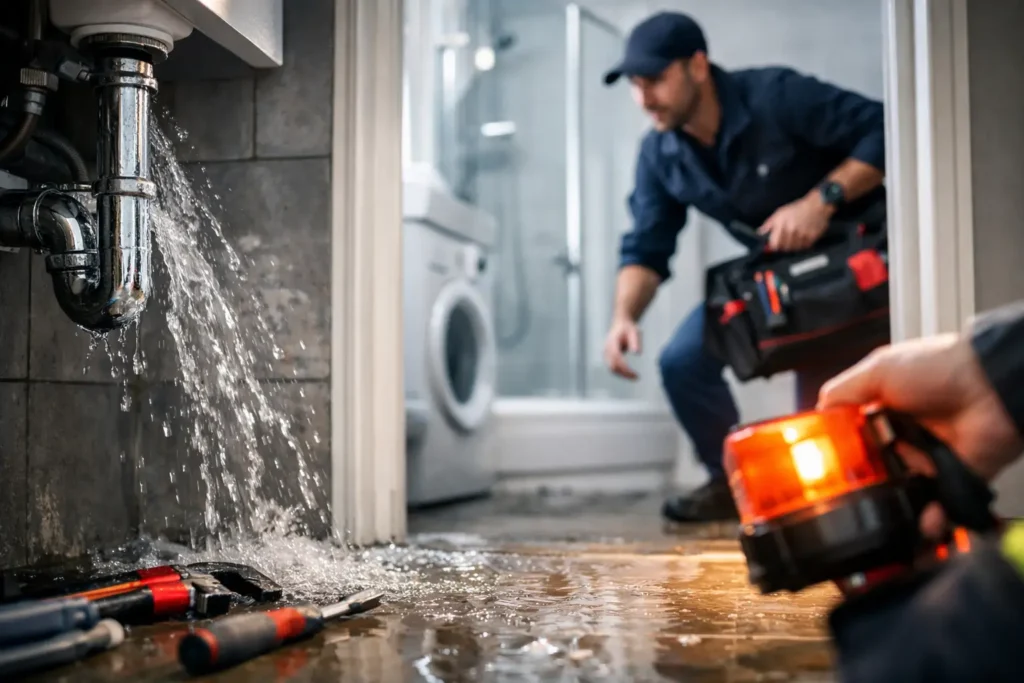
A burst pipe above a server room, an overflowing toilet in a busy retail space, or sewage backing up into a home can disrupt more than a single room. An effective emergency plumbing response helps limit water damage, protect occupants, reduce downtime, and keep a manageable problem from becoming a costly restoration project.
For property owners and facility teams, the priority is not to diagnose every cause on the spot. The priority is to make the area safe, control the water where possible, document the issue, and get qualified plumbing support moving quickly.
What Counts as a Plumbing Emergency?
A plumbing issue is an emergency when it creates an immediate risk to people, property, business operations, or sanitation. Some problems can wait for a planned repair during regular hours. Others need prompt attention because the damage continues every minute the water, wastewater, or gas line remains uncontrolled.
A burst or visibly leaking pipe is a clear example, especially if water is spreading through ceilings, walls, electrical areas, flooring, stockrooms, or tenant spaces. A major drain backup also requires urgent action. Wastewater can introduce health concerns, damage finishes, and force parts of a building to close until cleaning and sanitization are complete.
Loss of water service can be equally urgent in an occupied property. Offices, restaurants, residential buildings, clinics, and industrial facilities may not be able to operate safely without working restrooms, handwashing stations, or process water. A suspected gas leak connected to plumbing equipment requires immediate evacuation procedures and specialized emergency support.
The right response depends on the building, the source of the problem, and what is at risk. A small drip beneath a bathroom vanity is usually a scheduled maintenance matter. A leak that is traveling into another unit or toward electrical equipment is not.
Emergency Plumbing Response: The First 15 Minutes
Fast action matters, but unsafe action creates additional problems. Facility managers should ensure that staff, tenants, customers, and visitors stay away from wet areas, standing water, exposed wiring, or contaminated wastewater. If water is near electrical outlets, panels, appliances, or equipment, do not enter the area until it is safe to do so.
If the source is accessible and it can be done safely, shut off the local fixture valve. For a larger leak, use the property’s main water shutoff valve. Commercial and industrial facilities should keep the main valve location clearly identified and make sure key personnel know how to operate it. This simple preparation can save significant time during an after-hours incident.
Next, isolate the affected area. Close doors where appropriate, place warning signs, move stock or portable equipment away from water, and protect unaffected spaces. For an active toilet overflow or drain backup, stop using nearby fixtures. Continuing to run sinks, flush toilets, or use floor drains can increase the volume of wastewater entering the affected line.
Take photos and note the time the issue was discovered, the visible source, affected rooms, and actions already taken. This information helps the service team arrive prepared and supports communication with property stakeholders, insurers, and tenants when needed.
Information That Speeds Up Service
When contacting an emergency plumbing provider, clear details help dispatch the right technician, tools, and materials. Explain whether the problem involves clean water, a drain blockage, sewage, low water pressure, a water heater, or a suspected gas line issue. State whether water has been shut off and whether the area has electrical exposure or sanitation concerns.
For a managed property, share the building type, access requirements, parking instructions, security contact, and the exact location of the issue. A technician arriving at a large office complex or multi-unit residential property should not lose time searching for the affected riser, utility room, or suite.
It is also helpful to describe operational impact. Is a restroom closed? Is a tenant floor affected? Has water reached inventory, IT equipment, elevators, or finished ceilings? This allows the response to be prioritized based on risk rather than the order in which calls were received.
Why Plumbing Emergencies Need More Than a Quick Repair
Stopping a leak is essential, but it may not be the full scope of work. Water can travel behind walls, beneath flooring, through ceiling voids, and into adjacent units. A drain backup may require cleanup, sanitization, odor control, and inspection of the underlying line after the immediate blockage is cleared.
This is where a coordinated facilities partner provides practical value. Rather than assigning separate vendors for plumbing, electrical safety checks, civil repairs, cleaning, and restoration-related work, property teams can benefit from one point of contact that coordinates the required disciplines.
For example, a failed pipe connection may require plumbing repair, ceiling access, drywall patching, repainting, water extraction, and deep cleaning. Treating these as separate tasks can slow recovery and create communication gaps. An integrated response helps keep the work organized, with clearer accountability from the initial call through site handover.
At the same time, not every event requires major corrective work. A professional inspection should identify what is necessary now, what should be monitored, and what can be planned as a preventive repair. This approach supports cost control without ignoring issues that may return later.
Preventing the Next Emergency
Many plumbing emergencies begin as smaller warning signs: recurring clogs, slow drains, unexplained water pressure changes, moisture marks, rusted connections, unusual odors, or intermittent toilet overflows. Delaying inspection can turn a routine maintenance visit into an urgent callout.
A planned maintenance program gives building owners and facility managers a better view of plumbing conditions before failure occurs. Routine inspections can identify aging valves, corroded pipework, faulty water heaters, damaged flexible hoses, blocked drain lines, and weak seals around fixtures. In older properties, preventive work is often more cost-effective than repeated reactive repairs.
High-use areas deserve particular attention. Public restrooms, staff kitchens, laundry areas, mechanical rooms, irrigation connections, and tenant utility spaces experience frequent use and are more likely to show early signs of wear. Commercial properties should also review drain capacity and cleaning schedules before periods of heavy occupancy or seasonal demand.
A useful emergency plan should include the main water shutoff location, emergency contact details, access procedures, a list of sensitive equipment zones, and clear escalation steps. The plan does not need to be complicated. It simply needs to be available when the usual decision-maker is off-site or when an incident occurs outside normal business hours.
Choosing a Reliable Emergency Plumbing Partner
Availability matters, but response quality matters just as much. Look for a provider that can communicate clearly, assess the issue on arrival, explain immediate actions, and coordinate follow-up repairs where needed. The lowest initial callout price may not represent the best value if the work is incomplete, delayed, or requires multiple vendors to finish.
For portfolio managers and business operators, consistency is especially valuable. A service partner that understands the site layout, equipment history, access rules, and maintenance priorities can respond with less disruption. Annual maintenance arrangements can also simplify scheduling, reporting, and accountability across plumbing and related building services.
Maxa Technical Services LLC provides integrated property maintenance support for residential, commercial, and industrial clients, including plumbing, electrical, HVAC, civil works, cleaning, and fit-out services. With 24/7 support availability and a single point of contact, the focus is on helping clients contain urgent issues and return their spaces to normal operation efficiently.
When water is where it should not be, the best next step is simple: protect people, stop the source if it is safe, isolate the area, and call for qualified help. A calm, organized response gives your property the best chance of avoiding unnecessary damage and disruption.