
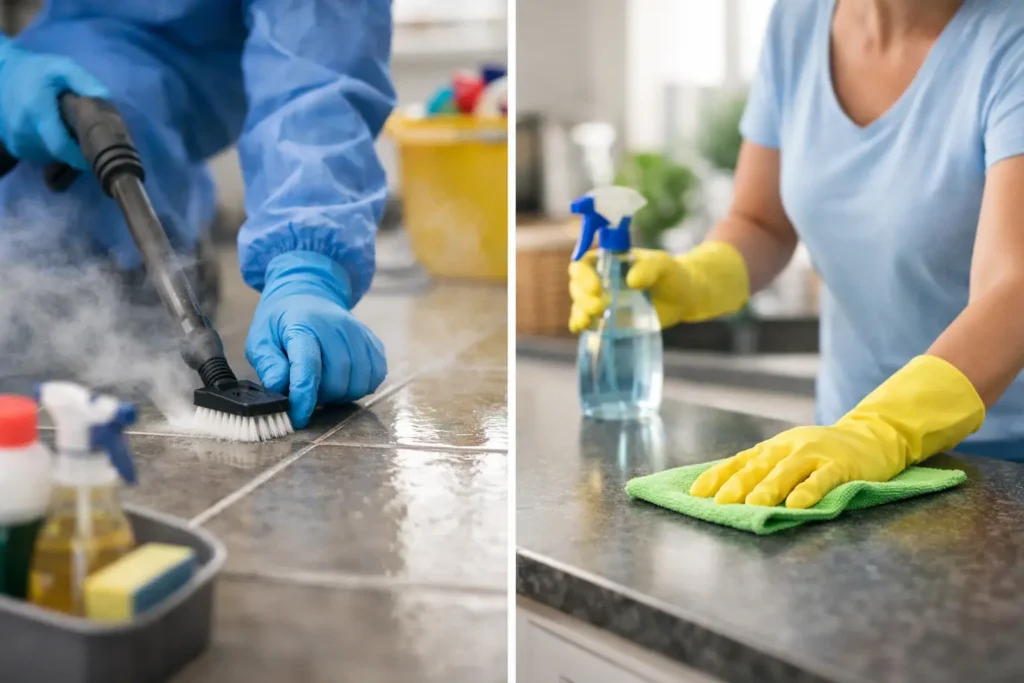
A lobby can look spotless at 9 a.m. and still hide months of buildup in vents, grout lines, corners, and high-touch surfaces. That is where the real decision starts. Deep cleaning vs regular cleaning is not just about frequency. It is about purpose, risk, appearance, and how well a property is actually being maintained over time.
For homeowners, landlords, facility managers, and operations teams, choosing the right cleaning scope affects more than presentation. It influences indoor hygiene, asset life, staff comfort, tenant satisfaction, and even how often you end up paying for corrective work later. If cleaning is treated as a simple checkbox, small issues tend to become expensive ones.
What deep cleaning vs regular cleaning really means
Regular cleaning is routine maintenance. It keeps spaces presentable, functional, and under control day to day or week to week. This usually includes visible-surface tasks such as dusting accessible areas, sweeping, mopping, vacuuming, wiping counters, cleaning restrooms, emptying trash, and keeping common areas in usable condition.
Deep cleaning goes further. It targets the dirt, grease, residue, bacteria, and hidden buildup that routine service does not fully remove. It reaches neglected areas, hard-to-access surfaces, and places that slowly collect contamination without being obvious at first glance. Think behind appliances, inside grout lines, around vents, under heavy furniture, on baseboards, on door frames, and in areas affected by moisture, traffic, or construction dust.
The difference is not that one is good and the other is better. The difference is that each serves a different operational need. Regular cleaning preserves daily standards. Deep cleaning resets the space.
Regular cleaning: built for consistency
In homes, offices, retail units, and shared buildings, regular cleaning is what keeps a property usable and professional. It supports everyday occupancy. Floors are maintained, washrooms stay sanitary, trash does not pile up, and surfaces remain acceptable for normal use.
This type of service works best on a recurring schedule because it controls visible dirt before it spreads. In a commercial setting, it helps maintain first impressions for visitors and gives staff a cleaner working environment. In residential settings, it reduces daily stress and keeps basic hygiene on track.
The limitation is simple. Regular cleaning is designed around practical time and frequent repetition. It usually does not include intensive scrubbing of buildup, detail work in concealed areas, or treatment of surfaces that need specialized tools, chemicals, or access methods. If a property has not been maintained properly for months, routine cleaning alone will not bring it back to standard.
When regular cleaning is the right choice
Regular cleaning makes the most sense when a property is already in decent condition and needs ongoing upkeep rather than correction. It is also the right fit for occupied spaces where continuity matters more than disruption. Offices, apartment common areas, villas, clinics, shops, and managed buildings all benefit from scheduled routine cleaning because the work prevents visible decline.
For operators focused on cost control, regular service is usually the foundation. It spreads maintenance across time and helps avoid the sudden need for large-scale cleanup.
Deep cleaning: built for correction and prevention
Deep cleaning is what you schedule when routine maintenance is no longer enough, or when a space needs a more complete reset. This often happens after tenant move-outs, before new occupancy, after renovation, before audits or inspections, during seasonal resets, or when hygiene standards have slipped because of heavy use.
In practical terms, deep cleaning is more labor-intensive and more detailed. It involves stronger degreasing, scale and stain removal, edge work, attention to hidden surfaces, and cleaning methods selected for material type and contamination level. In kitchens, that may mean addressing grease in places regular wiping misses. In bathrooms, it may mean removing mineral deposits, soap scum, and grime embedded in tile joints. In office and residential spaces, it often includes neglected corners, upholstery-adjacent areas, vents, switches, skirting, and buildup around fixtures.
The value is not only visual. Deep cleaning can improve air quality, reduce odor sources, slow wear on finishes, and create a healthier environment for occupants. For landlords and facility teams, it also protects the handover standard of the property.
When deep cleaning is the better choice
A deep clean is usually the smarter option when surfaces look clean at a glance but still feel sticky, stained, dusty in detail, or dull from accumulated residue. It is also appropriate for properties with high foot traffic, food preparation areas, spaces exposed to moisture, and units that have gone through vacancy, neglect, or construction activity.
There are also timing-based triggers. If it has been many months since a property received anything beyond surface cleaning, deep cleaning is probably overdue. The same applies when complaints start appearing around odors, washroom condition, floor appearance, or dust returning too quickly after routine service.
Cost, time, and disruption: the trade-offs
One reason property owners hesitate over deep cleaning is cost. On paper, it is more expensive than regular cleaning. It takes longer, requires more effort, and often needs trained teams with the right equipment and chemicals for different materials.
But the lower upfront price of routine cleaning can be misleading if the property actually needs restoration-level attention. Repeated light cleaning over heavy buildup often wastes time and still leaves the site below standard. In that case, deep cleaning is more efficient because it addresses the source of the problem rather than just its visible layer.
There is also the issue of disruption. Regular cleaning can usually happen around occupancy with minimal interference. Deep cleaning may require off-hours planning, access coordination, furniture movement, or section-by-section execution. For active commercial spaces, that matters. The right approach depends on whether uninterrupted operations are the priority or whether the property needs a stronger intervention to reset conditions.
Why the choice matters for property performance
Cleaning is often treated as separate from maintenance, but in real operations the two are closely connected. Dirt buildup hides defects. Grease affects surfaces and equipment areas. Dust accumulation can worsen indoor conditions. Moisture-related residue around fixtures may point to plumbing issues. Post-construction debris can affect finish quality and usability.
That is why a one-size-fits-all cleaning plan often fails. A residential villa with pets, children, and heavy kitchen use has different needs from a corporate office or mixed-use building. A retail store needs appearance and customer-facing consistency. A managed facility may need cleaning coordinated with HVAC, electrical access, minor repairs, or handyman work.
This is also where integrated service support makes a practical difference. If a cleaning team identifies cracked sealant, drainage issues, damaged grouting, stained ceilings, or airflow-related dust patterns, the next step should not require a separate round of contractor sourcing and follow-up. For many clients, operational efficiency comes from having one provider that can see the full picture and act on it.
How to decide what your property needs now
Start with condition, not assumptions. If the property is maintained regularly, presents well, and does not have visible buildup in neglected zones, regular cleaning may be enough. If standards drop quickly after routine service, that usually signals underlying accumulation that surface-level cleaning is not removing.
Look at use intensity as well. The more traffic, food handling, moisture, occupancy turnover, or dust exposure a space has, the more likely it is to need periodic deep cleaning layered on top of routine service. This is common in offices, commercial kitchens, washrooms, retail environments, staff accommodations, and homes with high daily activity.
It also helps to think in cycles instead of either-or terms. For most properties, the best model is not deep cleaning instead of regular cleaning. It is regular cleaning for maintenance and deep cleaning at planned intervals or trigger points. That approach gives you daily control without allowing hidden problems to accumulate.
A practical standard that works
For most homes and facilities, regular cleaning should carry the operational load, while deep cleaning should be scheduled strategically – quarterly, seasonally, before occupancy changes, after projects, or whenever hygiene and presentation have clearly slipped. The right frequency depends on traffic, industry, property type, and expected standards.
What matters most is clarity of scope. Many cleaning problems come from vague expectations. A client assumes hidden areas are included. The service team assumes the request covers only routine visible surfaces. The result is frustration on both sides. Clear scope, realistic frequency, and proper site assessment solve most of that.
At Maxa Technical Services LLC, that practical approach fits how properties actually operate. Clients do not just need a cleaner space. They need a dependable service plan that protects the property, reduces coordination burden, and keeps standards consistent across day-to-day upkeep and corrective work.
If you are deciding between the two, the best question is not which service sounds more thorough. It is what your property needs to stay functional, presentable, and easier to manage next month, not just by the end of today.