
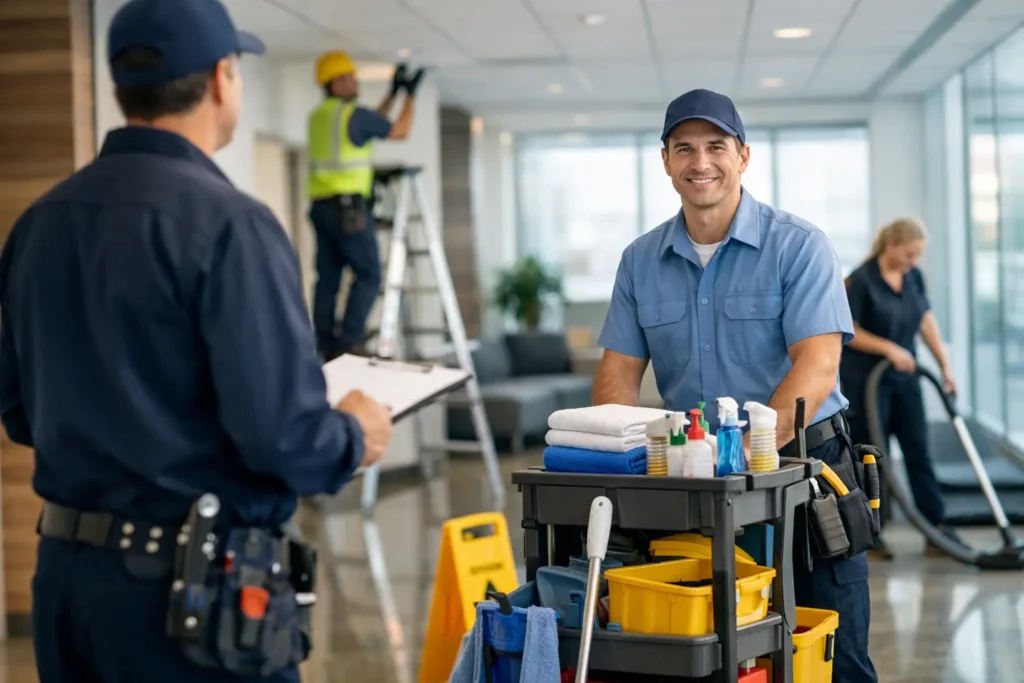
A leaking pipe in an office restroom, an AC failure during business hours, or an uncleaned common area can quickly become more than a small maintenance issue. It can interrupt operations, affect tenants and customers, create safety concerns, and pull your team away from more important work. The best commercial maintenance services prevent that disruption by keeping technical, cleaning, and repair needs under one coordinated plan.
For facility managers, property owners, landlords, and operations teams, the real question is not simply who can fix a fault. It is who can respond reliably, understand the property, control costs, and handle multiple requirements without creating a new coordination problem.
What the Best Commercial Maintenance Services Should Cover
Commercial properties need more than occasional repairs. Offices, retail units, warehouses, residential buildings, and industrial facilities all rely on systems that must work together every day. When providers only cover one trade, managers are often left contacting separate contractors for electrical issues, plumbing repairs, HVAC servicing, civil work, cleaning, and landscaping support.
That fragmented approach creates delays. It also makes accountability harder when one issue affects several areas of the building. For example, a water leak may require plumbing repair, ceiling restoration, sanitization, and follow-up cleaning. A single provider with integrated capabilities can coordinate the work in the right order and give the client one clear point of contact.
A dependable commercial maintenance partner should be able to support core technical services, including plumbing, electrical work, HVAC maintenance, handyman repairs, and civil works. Cleaning services should also be part of the conversation, especially for high-traffic commercial spaces where deep cleaning, sanitization, post-construction cleaning, and routine upkeep affect both presentation and hygiene.
The right scope depends on your property. A small office may prioritize AC reliability, electrical safety, and regular cleaning. A mixed-use building may need broader support across common areas, tenant spaces, landscaping, repair work, and emergency callouts. The key is choosing a provider whose service range matches the demands of your site without forcing you to manage several vendors.
Look Beyond the Initial Repair Price
A low quote can be attractive, particularly when a repair appears straightforward. However, the lowest immediate price does not always produce the lowest operating cost. Poor workmanship, unclear scope, delayed attendance, or repeated callouts can cost far more than a properly planned service arrangement.
Ask what is included in the quoted price. Does it cover inspection, labor, materials, reporting, access equipment, cleanup, and follow-up testing? Are emergency callouts billed differently? Is there a clear approval process for additional work? These details help prevent unexpected charges and make maintenance spending easier to forecast.
Competitive pricing matters, but value comes from consistency. A provider that understands your building history can identify recurring faults, recommend practical corrective work, and reduce repeat breakdowns. This is particularly valuable for HVAC, plumbing, and electrical systems, where small unresolved issues can become costly disruptions.
Response Time Is Part of Service Quality
Commercial maintenance is often measured when something goes wrong. A provider may offer a wide range of services, but that does not help if the team cannot respond when a critical issue affects operations.
Before appointing a contractor, confirm how requests are received and managed. You should know whether support is available around the clock, how urgent jobs are prioritized, and who communicates updates while work is underway. A clear process reduces uncertainty during emergencies and helps your internal team keep tenants, employees, or customers informed.
Not every issue requires an emergency response. A loose cabinet handle or minor paint touch-up can be scheduled efficiently. A burst pipe, electrical fault, blocked drainage line, or failed cooling system may require immediate attention. The best providers distinguish between urgent and planned work while treating every request with clear ownership.
Why Preventive Maintenance Delivers Better Control
Reactive maintenance has its place. Buildings will always experience unexpected faults. But relying only on callout repairs leaves property teams in a constant cycle of disruption, approvals, and urgent spending.
Preventive maintenance changes the approach. Regular inspections and scheduled servicing help identify warning signs before they become operational failures. Filters can be replaced before AC performance drops. Drainage can be checked before a blockage affects tenants. Electrical components can be inspected before a minor issue becomes a safety risk.
An annual maintenance contract can be a practical option for properties with ongoing technical needs. It provides a planned service framework, more predictable budgeting, and continuity from a team that becomes familiar with the site. It can also reduce the administrative burden of sourcing a contractor every time an issue appears.
That said, an annual contract should fit the property rather than follow a standard package. A newly fitted office with limited occupancy may require a different schedule than an older, heavily used building. Request a free inspection or site assessment before agreeing to a maintenance plan. The findings should guide the service frequency, priorities, and budget.
Evaluate the Team, Process, and Accountability
Commercial maintenance depends on the people carrying out the work. Skilled technicians, cleaners, and site supervisors should arrive prepared, follow safe working practices, respect occupied spaces, and leave the area clean after completion.
Ask how the provider manages quality. This may include work approvals, service records, job completion reports, supervisor checks, and clear communication about recommendations. Documentation is especially useful for facility managers who need to report maintenance activity, track recurring issues, or plan future capital work.
Accountability also means knowing who is responsible when a job involves more than one discipline. With an integrated provider, one coordinator can manage the sequence of work. The plumbing repair can be completed first, followed by wall restoration, deep cleaning, and final inspection. This helps avoid the common problem of one contractor blaming another for an unfinished result.
Insurance, safety procedures, and trained staff should be confirmed before work begins. This is not just a compliance consideration. It protects the property, the people using it, and your organization when work is performed in active business environments.
Choose a Provider That Simplifies Operations
The strongest maintenance relationship makes your day easier. Instead of maintaining separate contact lists for HVAC technicians, electricians, plumbers, cleaners, and repair contractors, you can raise requests through one service partner and receive coordinated support.
This model is especially useful for portfolios with multiple properties. A consistent provider can create service standards across sites, maintain records in one place, and help property teams compare recurring needs. It also gives decision-makers better visibility into where maintenance budgets are being spent.
Maxa Technical Services LLC supports this approach with integrated technical, cleaning, fit-out, and property maintenance services. For clients, the benefit is straightforward: fewer vendors to manage, faster coordination, and one accountable team for planned and urgent property requirements.
Questions to Ask Before You Appoint a Maintenance Partner
A short conversation before signing an agreement can reveal whether a provider is prepared to support your property over the long term. Ask about service coverage, response arrangements, inspection procedures, pricing structure, reporting, and how additional work is approved.
You should also ask whether the provider has experience with a property similar to yours. A retail location, office tower, warehouse, residential building, and industrial facility can have very different access requirements, operating hours, technical systems, and cleanliness standards. Relevant experience helps the team plan work with less disruption.
Finally, assess communication. A provider should give direct answers, explain the recommended work in practical terms, and keep you informed from inspection through completion. Good maintenance is not only about repairing equipment. It is about giving property stakeholders confidence that the building is being looked after.
The right commercial maintenance partner should reduce surprises, not add to them. Start with a clear inspection of your property, identify the services that matter most, and choose a team that can keep the work coordinated as your needs change.