
A cooling failure during a busy workday, a tenant complaint, or the first major heat wave is rarely caused by one bad day. Most AC problems build over time through dirty filters, blocked drainage, loose electrical connections, refrigerant issues, and skipped inspections. This AC maintenance guide helps property owners and facility teams protect cooling performance before a small issue becomes an urgent repair.
For homes, offices, retail spaces, and industrial properties, regular AC care is a practical cost-control measure. It helps systems run more efficiently, improves comfort, supports indoor air quality, and gives managers more time to plan repairs instead of reacting to downtime. The exact maintenance plan depends on the equipment type, occupancy, operating hours, and local conditions, but every system benefits from a clear routine.
Why Preventive AC Maintenance Pays Off
Air conditioning equipment works hardest when outdoor temperatures are highest and occupants expect consistent comfort. A neglected system has to work harder to move air and remove heat. That extra strain can raise energy use, reduce cooling capacity, and shorten the service life of components such as capacitors, fan motors, compressors, and contactors.
Preventive maintenance also protects day-to-day operations. In a commercial building, poor cooling can affect employee comfort, customer experience, stored materials, and equipment rooms. In a rental property, it can lead to repeated tenant calls and avoidable emergency expenses. For homeowners, it often means a system that runs continuously without delivering the cool air expected.
The value is not only in avoiding major breakdowns. Regular service makes it easier to spot worn parts, drainage concerns, airflow restrictions, and unusual operating patterns while repairs are still manageable. This allows budgets and schedules to stay under control.
AC Maintenance Guide: What to Check Regularly
The best maintenance routine separates simple checks from technical work. Building staff and homeowners can handle basic housekeeping safely, while qualified HVAC technicians should perform electrical, refrigerant, coil, and internal mechanical inspections.
Replace or clean air filters
The air filter is one of the most important and most frequently missed items. A dirty filter restricts airflow, which can cause uneven cooling, longer run times, frozen evaporator coils, and additional pressure on the blower motor.
Check filters monthly during periods of heavy use. Many residential systems need replacement every one to three months, while offices, retail spaces, pet-friendly buildings, dusty sites, and high-occupancy areas may need more frequent attention. Use the filter type and size recommended for the equipment. A higher-rated filter is not always the right choice if the system is not designed for the added airflow resistance.
Keep a record of the replacement date directly on the filter frame or in the property maintenance log. This small step prevents uncertainty when several people manage the same site.
Keep the outdoor unit clear
The outdoor condenser needs space to release heat. Leaves, grass clippings, dirt, packaging, landscaping growth, and stored materials can block airflow around the unit. When this happens, cooling efficiency drops and the system may overheat.
Inspect the area around the condenser regularly. Remove loose debris and keep shrubs, fencing, and other obstructions away from the unit according to manufacturer clearance requirements. Do not place items on top of the equipment. Avoid spraying the unit with a pressure washer, since high pressure can bend delicate coil fins and reduce performance.
If the coil is visibly dirty or the fins are damaged, arrange professional cleaning and inspection. A technician can clean the coil safely and correct bent fins without harming the unit.
Watch the condensate drain
Air conditioners remove moisture from indoor air. That moisture exits through a condensate drain line. If the line becomes blocked by dirt, algae, or buildup, water may overflow into ceilings, walls, equipment areas, or drain pans.
Look for water around the indoor unit, stained ceiling tiles, musty odors, or repeated shutdowns caused by a float switch. These are not issues to ignore, particularly in commercial properties where a small drain blockage can damage finishes or interrupt operations.
A qualified technician should flush and inspect the drain system during scheduled service. Properties with high humidity, extended operating hours, or recurring drain issues may need more frequent treatment.
Check thermostat settings and airflow
A thermostat that is poorly located, incorrectly programmed, or malfunctioning can create comfort complaints even when the AC equipment is in good condition. Confirm that temperatures are set appropriately for the space and operating schedule. For commercial sites, avoid cooling empty areas unnecessarily after hours unless equipment or inventory requires it.
Walk through occupied areas and listen to feedback from users. Hot spots, weak airflow, unusual noise, and rooms that cool too slowly can point to duct leakage, blocked vents, damper issues, undersized equipment, or maintenance needs. Keep supply and return vents open and free from furniture, boxes, or display materials.
What Professional HVAC Service Should Include
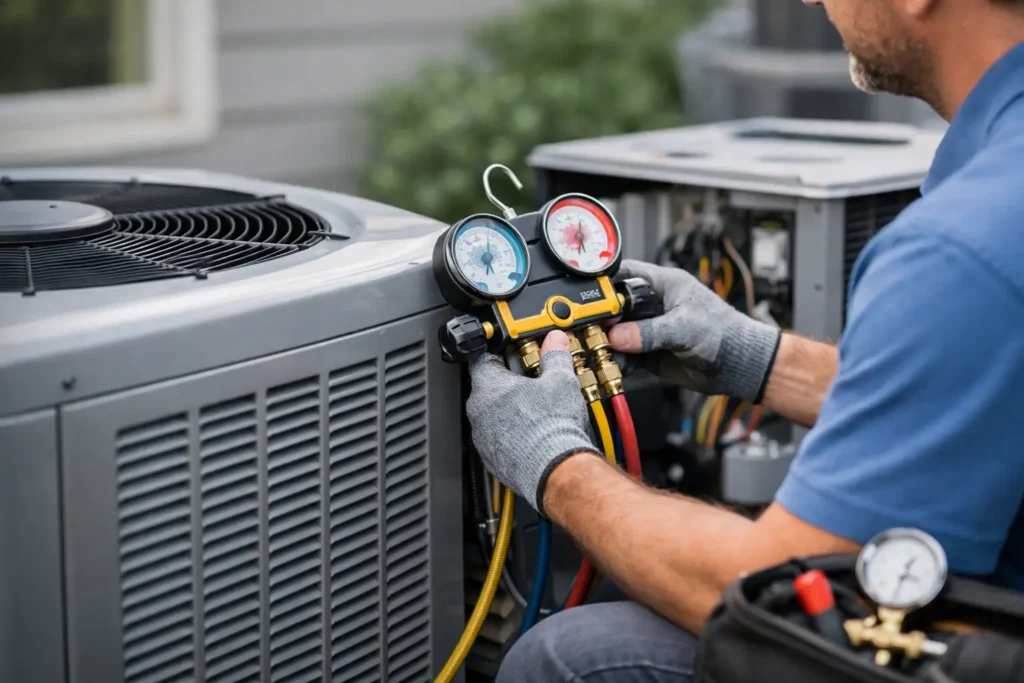
A full AC service goes beyond replacing a filter. It should evaluate the system’s condition, cooling output, safety, and likely maintenance needs. The technician’s exact checklist will vary by system, but scheduled service should generally cover electrical connections, capacitors, contactors, fan motors, belts where applicable, coil condition, drain operation, thermostat controls, refrigerant performance, and temperature split across the system.
Technicians should also inspect for vibration, corrosion, refrigerant leaks, damaged insulation, duct concerns, and signs of component wear. Refrigerant should not simply be topped off as a routine task. If a system is low, the technician should identify the cause and recommend the appropriate repair. Refrigerant loss can indicate a leak that will continue affecting performance if left unresolved.
For larger commercial and industrial sites, the service report matters as much as the visit itself. Ask for clear findings, recommended actions, asset details, photos when useful, and priority levels for repairs. This creates a reliable maintenance history and makes it easier to plan capital replacements before equipment reaches failure point.
Set the Right Maintenance Frequency
Most residential systems benefit from professional maintenance at least once a year, ideally before the cooling season begins. In regions with long hot seasons or systems that operate nearly year-round, twice-yearly visits can be more appropriate.
Commercial buildings often require quarterly inspections or a customized annual maintenance schedule. The right frequency depends on occupancy, dust levels, equipment age, operational criticality, and whether cooling supports servers, production, medical functions, or temperature-sensitive stock. A lightly used office suite has different requirements from a restaurant, retail center, warehouse, or multi-tenant property.
Do not rely only on a calendar. Increase inspection frequency after construction work, landscape work near outdoor units, water incidents, repeated comfort complaints, or periods of unusually heavy system use.
Warning Signs That Need Prompt Attention
Some AC issues need service quickly, even if the system is still running. Delaying action can turn a minor repair into equipment damage or a complete shutdown. Contact a qualified HVAC provider when you notice any of the following:
- Warm air, weak airflow, or rooms that no longer reach the thermostat setting
- Water leaks, repeated drain pan overflow, or visible ice on refrigerant lines or indoor coils
- Burning smells, electrical odors, tripped breakers, loud grinding, buzzing, or repeated clicking
- A sudden increase in energy costs, longer operating cycles, or frequent short cycling
- Uneven temperatures, excessive humidity, or recurring occupant comfort complaints
Electrical smells, smoke, or repeated breaker trips should be treated as urgent safety concerns. Turn off the system if it is safe to do so and request professional support.
Build Maintenance Into Property Operations
The strongest AC maintenance programs are organized, not reactive. Assign responsibility for monthly visual checks, filter changes, and reporting comfort issues. Keep equipment labels clear, maintain an asset register, and document service dates, repairs, warranties, and recurring faults. For multi-site properties, a consistent reporting format helps compare equipment condition and maintenance costs across locations.
An annual maintenance contract can reduce the administrative burden by setting inspections, preventive tasks, and response procedures in advance. For property managers coordinating HVAC, plumbing, electrical, cleaning, and general repairs, using an integrated service partner can also reduce vendor follow-up and simplify communication. Maxa Technical Services LLC supports this approach with coordinated property maintenance and 24/7 service readiness.
Reliable cooling is built through small, scheduled actions taken before the system is under pressure. Start with a filter check, clear the outdoor unit, review the last service report, and schedule professional inspection before the next peak-demand period arrives.